If you own a home inside the Old and Historic District in Alexandria, replacing a window isn't a simple swap — it's a decision that has to satisfy your eyes, your energy bill, and often the Board of Architectural Review. This guide breaks down what actually works for pre-1900s sash windows without triggering a denial or a heating bill that doubles.
- True divided lite wood windows pass BAR review fastest in Old Town Alexandria in 2026 — buy for street-facing facades.
- Vinyl SDL windows get rejected on primary elevations more often than any other option — skip them out front.
- Storm windows over original sash preserve historic glass and cut drafts without touching the original opening — buy for budget preservation.
- Aluminum-clad wood windows handle Alexandria's humidity swings with less upkeep than bare wood — consider for rear and side elevations.
Why this matters
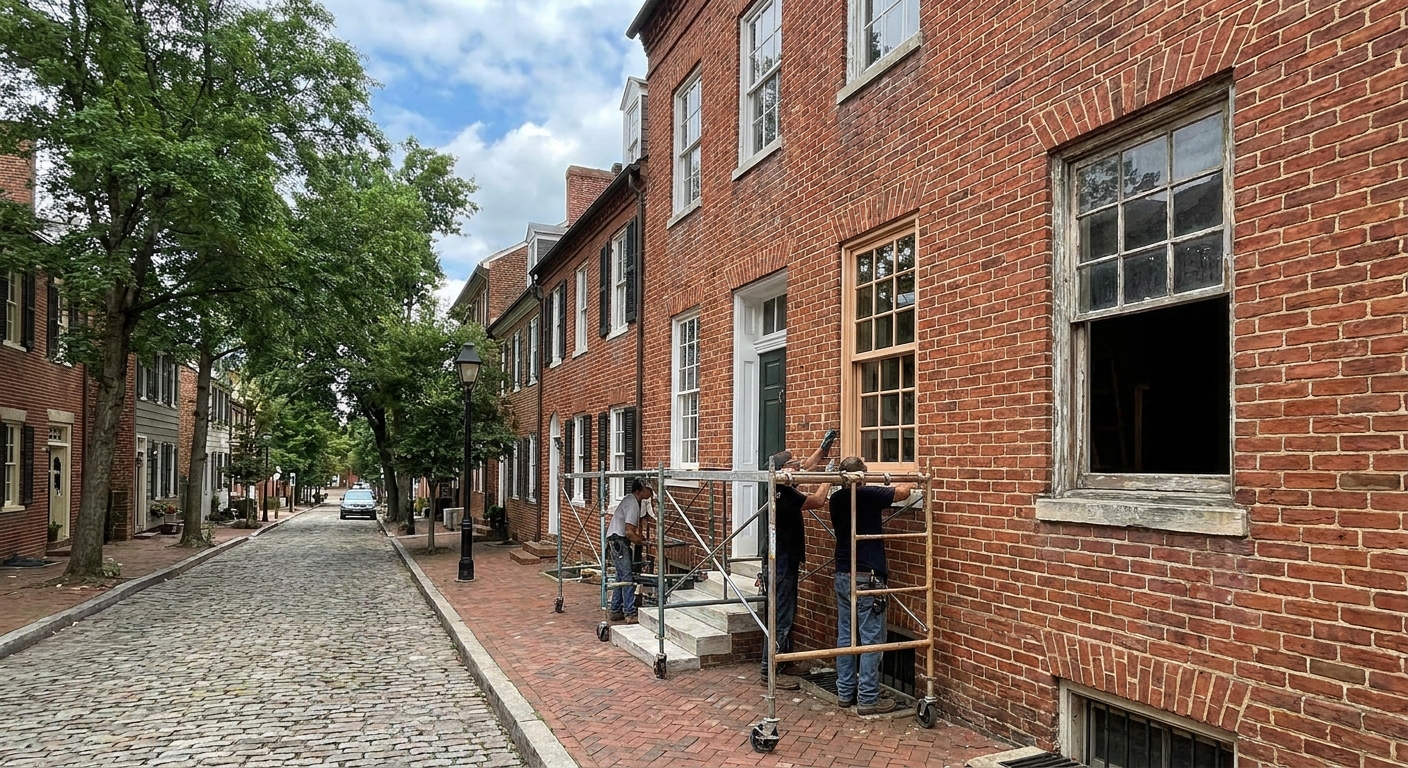
Old Town Alexandria homes were mostly built between the 1750s and 1930s, and a large share sit inside a locally designated historic district where exterior changes need approval before work starts. A window replacement for historic homes done wrong doesn't just look off — it can get flagged during a resale inspection or a future BAR complaint, and by then the window is already installed.
The other side of this: old single-pane wood sash windows lose heat fast, and DMV winters aren't gentle. The trick in 2026 is finding a window that reads as original from the sidewalk but performs like something built this decade. That's a narrower list than most homeowners expect.
Who this is for
This guide is for owners of homes built before roughly 1945 in Alexandria, Arlington, or older pockets of DC and Maryland where a homeowners association, historic overlay district, or the Alexandria BAR has a say in what your front-facing windows look like. If your house sits on a street with sidewalk trees, brick rowhouses, and a preservation plaque, this applies to you. If you're in a 1995 subdivision in Woodbridge, most of this doesn't matter — go with standard vinyl replacement and skip straight to the comparison table for reference only.
What to look for in window replacement for historic homes
Muntin profile and depth
A flat, snap-in grid between two panes of glass reads as fake from ten feet away, and BAR reviewers in 2026 are trained to spot it instantly. True divided lite construction, where each pane sits in its own separate opening, or at minimum a simulated divided lite with a spacer bar between the glass layers, is what keeps an application moving instead of getting kicked back for revision.
Glass thickness and wave
Original 19th-century glass has a slight visual wave that machine-made glass doesn't replicate. Restoration glass, which mimics that texture, costs more but keeps a rehabbed window from looking like it came from a big-box store. Skip this on rear elevations where nobody's checking; keep it on anything visible from the street.
Sash material and paint compatibility
Wood takes paint the way the original sash did and can be repaired in place for decades. Vinyl can't be painted at all, and most historic district guidelines outright prohibit it on primary facades. Fiberglass splits the difference — it takes paint and holds up to Alexandria's humid summers better than bare wood.
Energy performance without bulk
A thick, modern insulated glass unit can push a sash out of its original depth and change how the window sits in a 100-year-old opening. Look for slim double-pane units built for retrofit into historic frames rather than standard new-construction glass packages.
BAR or HOA pre-approval process
Any exterior-visible replacement inside Alexandria's historic district needs a Certificate of Appropriateness before installation. A contractor who's filed these applications before knows what gets approved on the first pass versus what gets sent back for a redesign — that knowledge saves months.
Weatherstripping and storm window compatibility
A correctly weatherstripped original sash paired with a storm window often performs close to a modern double-pane unit, without changing the visible opening at all. This matters when full replacement isn't approved yet or isn't in this year's budget.
Top picks
True divided lite wood windows — the historically accurate pick. Real divided panes with restoration glass typically run in the range most preservation-grade projects budget for per opening, and they're the option BAR staff approve with the least back-and-forth. Buy for any street-facing window on a pre-1900 Old Town facade.
Storm windows over original sash — the preservation pick. These add a second glazing layer without touching the historic opening at all, and they're often the fastest path to a warmer house while a full window replacement plan gets approved. Buy if you want lower heating loss this winter without a BAR application.
Aluminum-clad wood windows — the low-maintenance pick. The exterior face resists the paint failure that plain wood sash sees after roughly 8-10 years in DC-area humidity, while the interior stays paintable wood. Consider for side and rear elevations where cladding color options aren't restricted.
Simulated divided lite vinyl windows — the budget pick, and the one that causes the most rejected applications. Vinyl can't be painted, doesn't hold true divided lite construction, and most Old Town guidelines bar it from primary facades outright. Skip for anything visible from the street; it's fine for a garage or shed window nobody reviews.
Fiberglass replacement windows — the wildcard. Fiberglass takes paint like wood, resists warping better than vinyl in summer heat, and holds a slimmer profile than aluminum-clad in most product lines. Consider where a BAR reviewer allows a modern material as long as the sightlines match the original.
What to avoid
- Snap-in grille windows marketed as "colonial style" — they look correct in a showroom and wrong on a 1790s rowhouse the moment sunlight hits the glass at an angle.
- Full-frame vinyl replacement on primary elevations — even where it's technically allowed, resale appraisers and future buyers in historic districts discount it.
- Skipping the Certificate of Appropriateness step — starting installation before approval can force a homeowner to remove and redo the work, which costs far more than waiting the extra weeks for a permit.
Verdict comparison table
| Option | Muntin authenticity | Maintenance | BAR approval odds | Verdict |
|---|---|---|---|---|
| True divided lite wood | Highest | Repaint every 8-10 yrs | High | Buy |
| Storm windows over original sash | N/A — keeps original | Low | Not usually required | Buy |
| Aluminum-clad wood | High | Low exterior, med interior | Moderate-high | Consider |
| Fiberglass replacement | Moderate-high | Low | Moderate | Consider |
| Vinyl SDL | Low | Very low | Low on street-facing | Skip |
Get a free estimate on historic windows
Same-day quotes for Old Town and greater DMV homes, 2026 scheduling open now.
FAQ
Do I need approval to replace windows in Old Town Alexandria?
Yes, if the window faces a public street inside the designated Old and Historic District, you need a Certificate of Appropriateness before work starts. Rear and side elevations not visible from the street sometimes qualify for a simpler review, but check with the Board of Architectural Review before ordering anything in 2026.
What's the best window replacement for historic homes in 2026?
True divided lite wood windows with restoration glass are the best window replacement for historic homes on street-facing facades because they match the original construction method reviewers expect. For non-visible elevations, aluminum-clad wood or fiberglass options save on maintenance without sacrificing much authenticity.
Is vinyl ever allowed on historic homes?
Rarely on primary facades — most Old Town guidelines exclude vinyl from street-visible windows because it can't be painted and doesn't replicate true divided lite construction. Vinyl is more commonly accepted on rear additions, garages, or non-contributing structures on the same lot.
How much does historic window restoration cost compared to full replacement?
Restoration of an original wood sash generally costs less per window than a full true divided lite replacement unit, since the existing frame and glass stay in place. Full replacement becomes the better option once rot or structural damage goes past what a repair can fix.
Can storm windows replace the need for new windows?
Storm windows won't replace a rotted or broken sash, but they add a second layer of glazing that cuts drafts significantly without any change to the historic opening. Many Old Town homeowners install storm windows as a lower-cost first step while saving for full sash restoration.
How long does BAR approval take for window replacement?
Timelines vary by case load and whether the application needs revisions, so build in extra weeks beyond a standard construction timeline. Projects with restoration-grade wood windows and accurate muntin profiles tend to move through review faster than proposals using vinyl or simulated grilles.
Do energy-efficient windows exist that still look historic?
Yes — slim retrofit double-pane units built specifically for historic sash depths give real insulation gains without the bulky look of standard new-construction glass. Pairing an original wood sash with a well-fitted storm window is another way to get efficiency gains without changing the window's appearance at all.
What material lasts longest on a historic home exterior?
Well-maintained wood with a quality paint schedule can last generations, which is why it remains the standard for street-facing historic windows. Aluminum-clad wood trades a bit of that longevity ceiling for lower repainting frequency on the exterior face.
One last thing
The detail that trips up most Old Town homeowners isn't the window material — it's the muntin depth. A grille that sits flush against the glass instead of standing proud by even a quarter inch reads as fake in direct sunlight, and that's usually the first thing a BAR reviewer or a sharp-eyed neighbor notices. Get that one measurement right and most of the rest of the approval process gets easier.
DMV Window Repairs handles free estimates and same-day service calls across the DMV, and a walk-through of your specific opening depths and BAR requirements is worth doing before any order goes in for 2026 installation.